
How Hydraulic Tube end forming machines Simplify Stainless Steel Tube Processing for Automotive Factories
In the high-stakes world of automotive manufacturing, where precision, durability, and production efficiency are non-negotiable, stainless steel tubes have become indispensable components—used in exhaust systems, fuel lines, brake assemblies, and cooling circuits. Yet processing stainless steel poses unique challenges: its high tensile strength, corrosion resistance, and rigidity make it far more difficult to shape than conventional metals. Against this backdrop, Hydraulic tube end forming machines have emerged as a game-changing solution, streamlining stainless steel tube processing for automotive factories and addressing pain points that once slowed production and compromised quality.
The Unique Challenges of Stainless Steel Tube Processing in Automotive Manufacturing
Stainless steel’s inherent properties—critical for withstanding extreme temperatures, chemical exposure, and mechanical stress in vehicles—make it a double-edged sword for manufacturers. Traditional tube forming methods, such as manual bending or mechanical pressing, struggle to handle its toughness: uneven pressure application leads to material deformation, inconsistent tube end profiles, and increased risk of cracks or micro-fractures. These issues are particularly problematic in automotive applications, where even minor flaws can compromise safety and durability.
Additionally, automotive production demands high-volume consistency, with thousands of identical tubes required for assembly lines. Conventional processing methods rely on multiple manual steps—cutting, deburring, forming, and inspection—creating bottlenecks, extending lead times, and raising the risk of human error. The need to adhere to strict industry standards (such as ISO/TS 16949) further amplifies the pressure, as non-compliant components can result in costly production halts or recalls. For automotive factories, simplifying stainless steel tube processing without sacrificing quality has long been a critical priority—one that hydraulic tube end forming machines are uniquely equipped to solve.
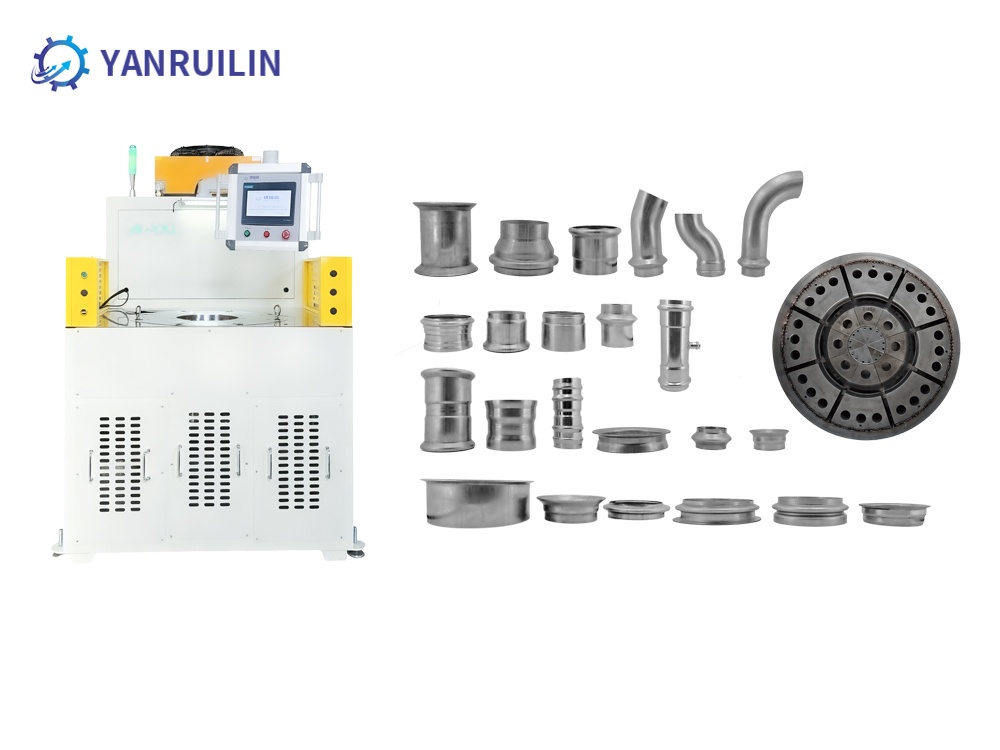
Core Capabilities: How Hydraulic Machines Simplify Stainless Steel Processing
Hydraulic tube end forming machines revolutionize stainless steel tube processing through three key capabilities, tailored to the needs of automotive manufacturing:
Uniform Hydraulic Force for Seamless Forming: Unlike mechanical systems that deliver inconsistent pressure, hydraulic machines generate steady, adjustable force (ranging from 10 to 50 tons) that adapts to stainless steel’s tensile strength. This uniform pressure ensures smooth, precise forming of tube ends—whether flaring, expanding, beading, or threading—without causing material fatigue or structural damage. The result is consistent tube profiles across high-volume production runs, eliminating the need for time-consuming rework or sorting of defective parts.
Integrated Workflow Automation: Hydraulic tube end forming machines streamline processing by integrating multiple steps into a single, automated workflow. Equipped with precision feeding systems, built-in deburring tools, and in-line quality checks, these machines eliminate manual handoffs between processes. For example, a stainless steel tube can be cut to length, deburred, formed to exact specifications, and inspected for dimensional accuracy in one continuous operation—reducing processing time per tube by 30-40% compared to traditional methods. This automation not only boosts throughput but also minimizes human error, a key factor in maintaining compliance with automotive quality standards.
Material-Specific Adaptability: Stainless steel comes in various grades (such as 304, 316, and 430) with distinct properties, requiring tailored processing parameters. Hydraulic tube end forming machines feature programmable control systems that store custom settings for different stainless steel grades, tube diameters (typically 8mm to 60mm for automotive applications), and forming requirements. Operators can switch between production tasks—from forming exhaust system tubes to brake line components—in minutes, adapting to changing assembly line needs without disrupting workflow. This flexibility is critical for automotive factories producing multiple vehicle models or accommodating design updates.
Why Automotive Factories Are Prioritizing Hydraulic Tube End Forming Machines
Beyond simplifying processing, several industry-specific factors are driving widespread adoption of hydraulic tube end forming machines in automotive manufacturing:
Durability Alignment: Stainless steel’s corrosion resistance and strength are essential for extending vehicle lifespan, and hydraulic forming ensures these properties remain intact. Unlike mechanical forming that can create micro-cracks, hydraulic pressure preserves the material’s structural integrity, reducing the risk of component failure in harsh operating conditions (e.g., extreme heat, road salt exposure).
Cost Optimization: By reducing rework, cutting labor costs through automation, and minimizing material waste (hydraulic precision uses up to 15% less stainless steel per tube), these machines deliver significant long-term savings. For automotive factories operating on tight margins, this cost efficiency is a decisive advantage.
Regulatory Compliance: Hydraulic tube end forming machines generate real-time data on processing parameters (pressure, temperature, dimensional accuracy), enabling factories to maintain detailed quality records required by automotive regulatory bodies. This data traceability simplifies audits and ensures accountability across the supply chain.
Shaping the Future of Automotive Stainless Steel Processing
As automotive manufacturing evolves—with the rise of electric vehicles (EVs) increasing demand for stainless steel cooling and battery system tubes, and stricter emissions standards driving the need for more durable exhaust components—hydraulic tube end forming machines are becoming an indispensable tool. Their ability to simplify complex stainless steel processing, deliver consistent quality at scale, and adapt to changing production needs aligns perfectly with the industry’s priorities.
For automotive factories, these machines are more than just equipment—they are a strategic investment in efficiency, reliability, and compliance. By eliminating the pain points of traditional stainless steel processing, hydraulic tube end forming machines are helping manufacturers meet the demands of modern automotive production, from high-volume assembly to specialized EV components. As the industry continues to prioritize durability and performance, hydraulic tube end forming technology will remain at the forefront of stainless steel processing innovation.
This website uses cookies to ensure you get the best experience on our website.

 Español
 Pусский
 Deutsch
 日本語
日本語 한국어
한국어 Italiano
 Türk dili
 हिन्दी
 Indonesia


Comment
(0)