
In the era of Industry 4.0, smart manufacturing technologies are reshaping industrial equipment, and Tube end forming machines are no exception. By integrating the Internet of Things, these critical manufacturing tools are evolving from standalone hardware to connected systems that deliver real-time performance insights, predictive maintenance capabilities, and significant reductions in unplanned downtime. This technological shift is redefining efficiency standards for industries reliant on precise tube forming—from automotive and aerospace to plumbing and industrial piping.
At the core of smart tube end forming machines lies a network of IoT sensors embedded throughout key components: tooling heads, hydraulic/pneumatic systems, motors, temperature regulators, and clamping mechanisms. These sensors continuously collect a wealth of operational data, including forming pressure, tool wear, cycle time, energy consumption, temperature fluctuations, and material feed rates. This data is transmitted to a centralized cloud-based platform or on-premises control system, where advanced analytics and machine learning algorithms process it to generate actionable insights. Unlike traditional machines that rely on manual inspections and reactive maintenance, IoT-enabled models create a digital twin of the equipment—a virtual replica that mirrors real-time operating conditions.
This digital twin allows for remote monitoring of machine performance, eliminating the need for on-site checks and enabling oversight of multiple machines across different production lines or facilities.
IoT integration delivers unprecedented visibility into machine operations. Manufacturers can access real-time dashboards displaying key performance indicators (KPIs) such as throughput, forming accuracy, error rates, and resource utilization. For example, if a sensor detects a deviation in forming pressure—indicative of tool wear or material inconsistency—the system instantly alerts operators, who can adjust parameters remotely or schedule a tool change before defects occur.
Cycle time optimization is another key benefit. By analyzing data on material flow and processing speeds, the IoT system identifies bottlenecks—such as delays in clamping or uneven material feeding—and suggests adjustments to streamline operations. This real-time feedback loop ensures that the machine operates at peak efficiency, reducing waste from misformed tubes and improving overall production throughput.
One of the most impactful advantages of IoT-integrated tube end forming machines is predictive maintenance. Traditional maintenance schedules are often based on fixed time intervals or reactive responses to breakdowns, both of which are inefficient: premature maintenance wastes resources, while unplanned downtime can halt production lines and incur significant costs. IoT sensors address this by monitoring the condition of critical components—such as tooling dies, bearings, and hydraulic hoses—for signs of wear, fatigue, or potential failure. Machine learning algorithms analyze historical and real-time data to predict when a component will require replacement or servicing, generating timely alerts for maintenance teams. For instance, if vibration sensors detect abnormal movement in a motor, or temperature sensors register overheating in a hydraulic system, the system can forecast failure timelines and recommend proactive repairs. This approach minimizes unplanned downtime by addressing issues before they escalate, extending machine lifespan and reducing maintenance costs.
Beyond real-time monitoring and predictive maintenance, IoT-enabled tube end forming machines support continuous process improvement. The accumulated operational data provides insights into long-term performance trends, such as seasonal variations in material properties, optimal parameter settings for different tube materials, and patterns in tool wear rates. Manufacturers can use this data to refine production workflows—for example, adjusting forming parameters for stainless steel vs. copper tubes based on historical performance data, or optimizing tool change schedules to align with actual wear patterns rather than arbitrary intervals. Over time, this data-driven approach leads to consistent improvements in product quality, reduced material waste, and lower operational costs.
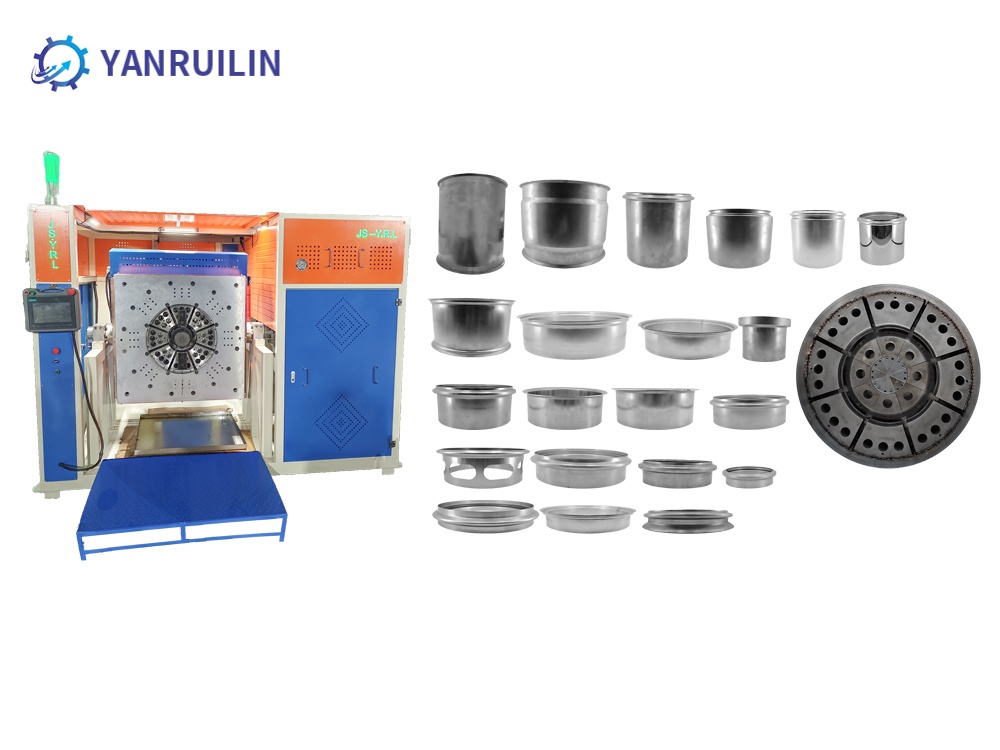
IoT-integrated tube end forming machines also offer enhanced connectivity with other smart systems in the production line, such as ERP (Enterprise Resource Planning) software, MES (Manufacturing Execution Systems), and supply chain management platforms. This seamless integration allows for end-to-end visibility of the manufacturing process, from raw material intake to finished product delivery. For example, production data from the tube forming machine can automatically update inventory records in the ERP system, ensuring accurate stock management and streamlining order fulfillment. Additionally, IoT technology provides scalability: as production needs grow, manufacturers can add more sensors or integrate new analytics features without overhauling the entire machine. Modular IoT platforms support the integration of additional functionalities—such as AI-powered quality inspection or energy consumption optimization—adapting to evolving industry demands.
As IoT technology advances, smart tube end forming machines are poised to become even more intelligent. Future innovations may include AI-driven self-adjustment, where machines automatically optimize parameters in real time based on material variations or production demands, and predictive quality control, where sensors detect potential defects before the forming process is complete. In an increasingly competitive manufacturing landscape, the integration of IoT into tube end forming machines is no longer a luxury but a necessity. By delivering real-time performance tracking, predictive maintenance, and data-driven optimization, these smart machines reduce downtime, improve efficiency, and enhance product quality—empowering manufacturers to stay ahead in a rapidly evolving industry. As Industry 4.0 continues to unfold, the role of IoT in tube forming will only grow, solidifying its position as a cornerstone of modern, efficient manufacturing.
This website uses cookies to ensure you get the best experience on our website.

 Español
 Pусский
 Deutsch
 日本語
日本語 한국어
한국어 Italiano
 Türk dili
 हिन्दी
 Indonesia


Comment
(0)