
In the competitive landscape of small-scale metal fabrication, where efficiency, cost control, and consistent quality are make-or-break factors, the choice between Tube end forming machines and manual tube processing has become a defining decision for operations aiming to scale and thrive. For small fabricators grappling with tight deadlines, limited labor resources, and growing customer demands, automated hydraulic or mechanical tube end forming machines are emerging as a transformative solution—cutting hours of manual labor while elevating output quality, reliability, and profitability.
Manual tube processing, long a staple for small shops, relies on skilled workers using hand tools, presses, or basic machinery to shape tube ends into flanges, beads, swages, or custom profiles. While this method may seem accessible due to lower upfront costs, it comes with inherent limitations that hinder productivity and consistency. Hand-operated processes are labor-intensive: a single tube end can take minutes to form, requiring repetitive physical effort that leads to fatigue, slower cycle times, and increased risk of human error. Even experienced workers struggle to maintain uniform dimensional tolerances across batches, as manual force application varies from piece to piece. This inconsistency often results in rework, wasted materials, and delayed deliveries—costly consequences for small fabricators operating on thin margins.
In contrast, tube end forming machines leverage automated technology and precise force control to streamline the forming process, slashing labor time by up to 80% compared to manual methods. These machines—whether hydraulic, pneumatic, or electric—execute forming tasks in seconds, with programmable settings that ensure repeatability across hundreds or thousands of tubes. For example, a task that takes a worker 10 minutes to complete manually can be finished in under a minute with an automated machine, freeing up labor to focus on higher-value tasks such as assembly, quality control, or customer service. This efficiency gain is game-changing for small shops, allowing them to handle larger order volumes without hiring additional staff, meet tight delivery windows, and take on more profitable projects.
Consistency and quality are another key advantage of tube end forming machines for small fabricators. Automated systems deliver uniform force across the tube surface, ensuring consistent wall thickness, tight dimensional accuracy, and seamless connections to fittings or components. This eliminates the variability inherent in manual processing, reducing rework rates and material waste. For small shops competing with larger manufacturers, this level of quality control is critical: it enhances customer trust, reduces warranty claims, and positions the business as a reliable supplier capable of meeting industry standards. Whether producing tubes for automotive, HVAC, furniture, or industrial applications, tube end forming machines ensure that every piece meets the exact specifications, regardless of batch size.
Tube end forming machines
Cost-effectiveness, often a primary concern for small fabricators, further tilts the scales in favor of tube end forming machines. While the initial investment may be higher than manual tools, the long-term savings are substantial. Reduced labor costs, minimized material waste, lower rework expenses, and increased throughput all contribute to a rapid return on investment (ROI). Additionally, modern tube end forming machines are designed with small shops in mind—compact footprints fit into limited workspace, and user-friendly controls require minimal training, eliminating the need for highly specialized operators. Many machines also offer versatility, handling a range of tube materials (steel, aluminum, copper, stainless steel) and diameters, allowing small fabricators to serve diverse customer needs without investing in multiple specialized tools.
Safety is another critical consideration for small shops, where workplace injuries can disrupt operations and incur significant costs. Manual tube processing involves repetitive lifting, bending, and forceful exertion, increasing the risk of musculoskeletal disorders, cuts, or crush injuries. Tube end forming machines reduce these risks by automating strenuous tasks, with built-in safety features such as emergency stops, protective guards, and pressure sensors that prevent accidents. This not only protects workers but also reduces downtime associated with injuries, ensuring smoother, more reliable operations.
As small fabricators face growing pressure to increase efficiency, improve quality, and reduce costs, the shift from manual tube processing to automated tube end forming machines has become a strategic imperative. These machines empower small shops to compete with larger manufacturers by unlocking higher productivity, consistent quality, and lower operational costs—all while saving hours of labor that can be reinvested into growing the business. Whether expanding capacity, improving customer satisfaction, or boosting profitability, tube end forming machines are no longer a luxury for small fabricators but a necessary tool for long-term success.
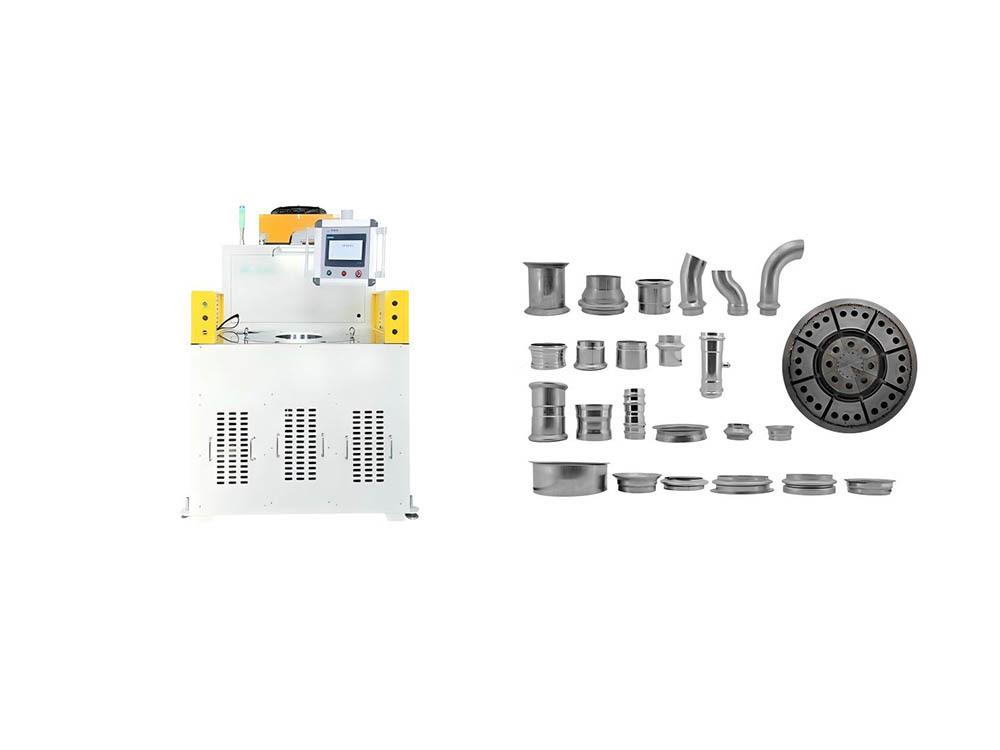
In an industry where time is money, tube end forming machines vs. manual processing is not just a choice between old and new—it’s a choice between stagnation and growth. For small fabricators ready to streamline operations, reduce labor burdens, and elevate their output, automated tube end forming technology offers a clear path forward, proving that even small shops can achieve big results with the right tools.
This website uses cookies to ensure you get the best experience on our website.

 Español
 Pусский
 Deutsch
 日本語
日本語 한국어
한국어 Italiano
 Türk dili
 हिन्दी
 Indonesia


Comment
(0)